Dating App Privacy: What Information Do Dating Apps Collect?
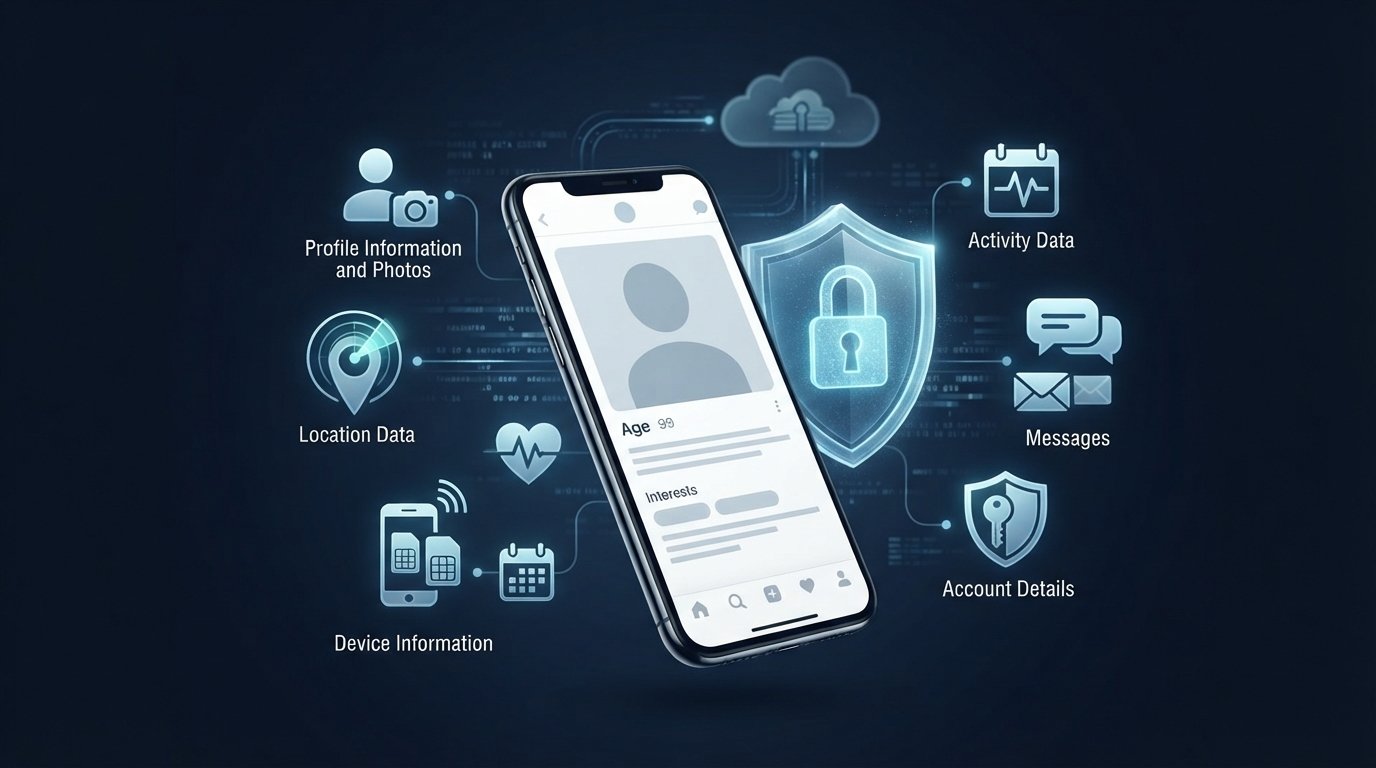
Dating apps can help people discover potential connections, but using these services also means sharing information with a digital platform. Some information is provided directly when you create a profile, while other data can be generated automatically as you use the app.
Understanding what dating apps may collect and how that information can be used is an important part of managing your online privacy.
The exact information collected varies from one dating app to another. A platform may collect basic profile details, location information, device data, activity information, messages, preferences, or other information needed to provide its services.
This does not mean every dating app collects every type of information. The best way to understand a particular service is to review its current privacy policy and account settings.
What Is Dating App Privacy?
Dating app privacy refers to how a dating platform collects, uses, stores, shares, and protects information associated with its users.
When you create an account, you may provide information intentionally. At the same time, the app may generate additional information from your activity.
For example, there can be a difference between:
- Information you enter yourself
- Information created by your activity
- Information collected from your device
- Information received from third-party services
Understanding these categories makes privacy policies easier to interpret.
What Personal Information Can Dating Apps Collect?
Dating apps may collect different types of personal information depending on their features and business model.

Account Information
When creating an account, you may provide information such as:
- Name or display name
- Email address
- Phone number
- Date of birth or age
- Login credentials
- Account preferences
Some platforms may allow users to register through another service, which can affect what information is shared during account creation.
Profile Information
A dating profile may contain information that you intentionally make available to other users.
This can include:
- Photos
- Bio
- Interests
- Education
- Occupation
- Relationship preferences
- Lifestyle information
- Dating preferences
Some of these details may be optional, while others may be necessary for particular features.
Location Information
Location can be particularly important for dating apps because users often want to discover people nearby.
Depending on the app and your device permissions, location-related information can potentially be used to:
- Show nearby profiles
- Apply distance preferences
- Improve recommendations
- Provide location-based features
The exact precision and method of location collection varies between platforms.
Do Dating Apps Track Your Location?
Some dating apps may use location information, but how they collect and use it depends on the service and your device settings.
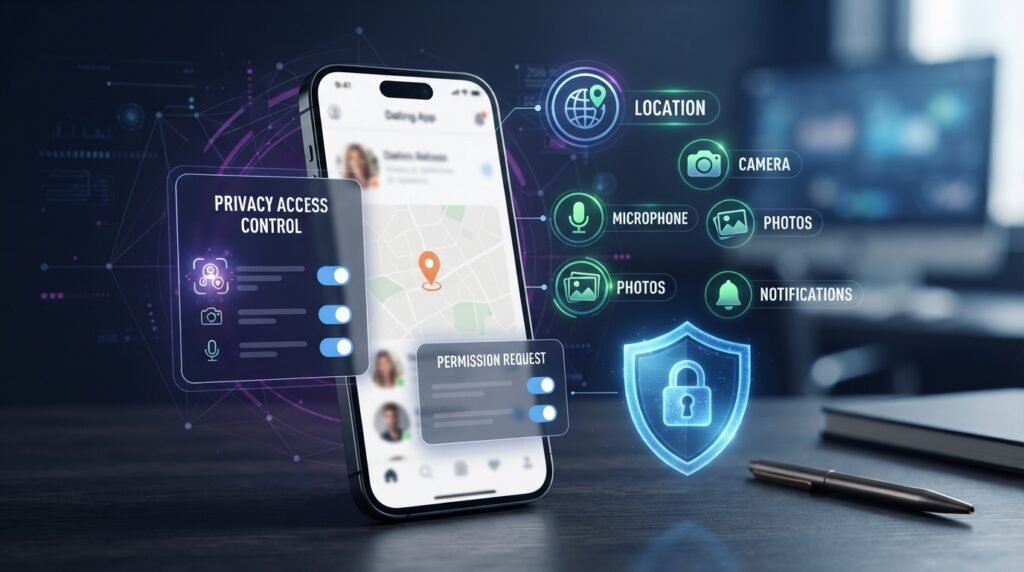
A dating app may receive location information through device permissions or other methods.
You should review:
- Your phone’s location permissions
- The dating app’s privacy settings
- The platform’s privacy policy
If an app does not need precise location access for a feature you use, check whether your device allows you to choose a less precise location option.
What Is Activity Data?
Activity data is information related to how you use a dating service.
Depending on the platform, this may include information about:
- Profiles you view
- Likes or other interactions
- Matches
- Features you use
- Searches or preferences
- Login activity
- Messages or communication activity
Activity information can help a platform operate its features and may also be used for personalization or recommendations.
Can Dating Apps Read Your Messages?
This depends on the specific platform, its technology, and its privacy practices.
Do not assume that messages sent through a dating app have the same privacy characteristics as a conversation protected by end-to-end encryption.
Some services may process messages for purposes such as:
- Providing the messaging service
- Detecting spam
- Preventing abuse
- Improving safety
- Enforcing platform rules
- Other operational purposes
Before sharing highly sensitive information, understand the privacy protections offered by the specific service.
What Device Information Can Dating Apps Collect?
Apps may receive certain technical information from your device.
Depending on the platform, this can include information such as:
- Device type
- Operating system
- App version
- IP address
- Browser information
- Network information
- Diagnostic data
- Device identifiers
Technical data can help services maintain security, troubleshoot problems, and understand how their applications are being used.
Do Dating Apps Collect Photos?
If you upload photos to your profile, the platform needs to process those images to provide the profile feature.
Depending on the service, photos may be stored on its systems and processed for purposes such as:
- Displaying your profile
- Moderation
- Safety checks
- Feature functionality
- Account management
Review the platform’s privacy policy to understand how uploaded content is handled.
Can Dating Apps Collect Information From Social Media?
Some dating services may offer options to connect external accounts or import information from other platforms.
If you connect another account, information may be shared between the services according to the permissions and terms involved.
Before connecting accounts, check what information the integration can access.
You do not need to connect every available service simply because the dating app offers the option.
How Do Dating Apps Use Your Information?
Information collected by dating platforms can have several purposes.
| Purpose | Possible Use |
| Account management | Creating and maintaining your account |
| Matching and recommendations | Helping provide relevant profiles |
| Personalization | Adjusting parts of your experience |
| Communication | Supporting messaging and other interactions |
| Safety | Detecting suspicious or abusive activity |
| Security | Protecting accounts and systems |
| Customer support | Responding to user requests |
| Analytics | Understanding how features are used |
| Advertising | Supporting advertising or marketing activities where applicable |
| Legal compliance | Meeting applicable legal requirements |
The exact purposes vary between services.
Do Dating Apps Sell Your Data?
There is no single answer for every dating app.
Different companies have different privacy policies and business models. Some may share certain information with service providers or business partners, while others may have different practices.
The important thing is to avoid assuming that all dating apps handle data in the same way.
Before creating an account, review the service’s privacy policy for information about:
- Data sharing
- Advertising
- Analytics
- Third-party services
- Data retention
- User rights
- Account deletion
Also pay attention to the definitions used in the policy because “selling,” “sharing,” and “processing” can have different legal meanings depending on the jurisdiction.
What Are Third-Party Services?
Dating apps may rely on outside companies to provide certain technical or business services.
For example, third-party providers can potentially support:
- Cloud infrastructure
- Payment processing
- Analytics
- Customer support
- Security
- Advertising
- Communication services
This does not automatically mean that a third party has unrestricted access to your information.
The specific data shared and purpose of sharing should be described in the platform’s privacy documentation.
How Long Do Dating Apps Keep Your Information?
Data retention policies vary.
Some information may be kept while your account remains active. Other information may be retained for a period after account deletion because of legal, security, fraud-prevention, or technical requirements.
For this reason, deleting an app from your phone is not necessarily the same as deleting your account or all associated information.
If you want to stop using a dating service, look for its official account-deletion process.
What Happens When You Delete a Dating App?
Deleting the app from your phone usually removes the application from your device. It does not necessarily delete your dating account.
These are two different actions.
Removing the App
Uninstalling the application can remove the software from your device.
Your account may still exist on the company’s servers.
Deleting the Account
Account deletion is a separate process that may be available through the app or website.
Depending on the service, some information may be deleted, anonymized, or retained for specific reasons.
Always check the platform’s instructions if your goal is to remove your account rather than simply stop using the app.
How Can You Control Your Dating App Privacy?
You cannot control every aspect of a platform’s data practices, but you can make choices that reduce unnecessary exposure.
Review Profile Visibility
Think carefully about what information you make publicly visible to other users.
You do not need to include every personal detail in your profile.
Check Location Permissions
Review your phone’s location permissions and choose the setting that makes sense for the features you use.
Limit Unnecessary Account Connections
Avoid connecting additional social accounts or services unless you understand the benefit and privacy implications.
Review App Permissions
Check whether the app has access to:
- Location
- Camera
- Microphone
- Photos
- Contacts
- Notifications
Only provide permissions that are necessary for the features you want to use.
Review Privacy Settings Regularly
Apps can introduce new features and settings over time.
Review your privacy options occasionally rather than assuming your original settings remain unchanged forever.
Should You Use Your Real Name on a Dating App?
The answer depends on the platform and your comfort level.
Some services may require certain identifying information for account creation, while others may allow a display name.
If a platform permits a display name, consider whether revealing your full legal name publicly is necessary.
At the same time, avoid providing false information that could create confusion or violate the platform’s rules.
Should You Share Your Workplace or Home Location?
You should think carefully before publishing highly specific location information.
For example, revealing your exact workplace, home address, or regular daily routine can provide strangers with information you may not want them to have.
A general area can sometimes communicate enough without exposing your precise location.
How Can You Protect Your Dating App Account?
Privacy and account security are closely connected.
Use a Unique Password
Do not reuse the same password across multiple accounts.
Enable Two-Factor Authentication
If the dating platform offers two-factor authentication, consider enabling it.
Protect Verification Codes
Never give account verification codes to another person.
Keep Your Email Account Secure
Your email account can be important for recovering other accounts, so protecting it is part of protecting your dating profile.
What Should You Avoid Sharing in Dating Chats?
Even if you trust someone, think carefully before sending sensitive information.
Avoid sharing:
- Passwords
- One-time codes
- Financial information
- Government identification documents
- Private account recovery information
- Home address
- Highly sensitive personal documents
Remember that once information is sent digitally, you may lose control over where it is stored or shared.
Dating App Privacy Checklist
Before using a dating app, consider these questions:
- What information does the app require?
- Which profile details are publicly visible?
- Does the app use location information?
- What device permissions does it request?
- Does it share information with third parties?
- Does it use advertising or analytics services?
- How can you download or access your data?
- How can you delete your account?
- What happens to your information after deletion?
- Where can you change privacy settings?
You do not need to understand every technical detail immediately. Start with the sections that affect your most sensitive information.
How to Read a Dating App Privacy Policy
Privacy policies can be long and full of legal terminology, but you can focus on specific sections.
Look for “Information We Collect”
This section explains what types of information the company may collect.
Look for “How We Use Information”
This tells you why the company processes the information.
Look for “Information Sharing”
This can explain whether information is shared with service providers, partners, advertisers, or other organizations.
Look for “Data Retention”
This section can explain how long different types of information may be retained.
Look for “Your Rights”
Depending on where you live, you may have rights relating to accessing, correcting, deleting, or restricting the processing of certain personal information.
Dating App Privacy vs Profile Privacy
These are related but different concepts.
Profile privacy concerns what other dating app users can see about you.
Platform privacy concerns how the dating company itself collects, uses, stores, and shares your information.
For example, you might hide your workplace from other users while the platform may still collect technical information about your device.
Understanding both levels is important.
Common Dating App Privacy Mistakes
| Privacy Mistake | Potential Problem |
| Sharing your home address | Can expose your physical location |
| Posting your daily routine | Can reveal predictable habits |
| Reusing passwords | Can put multiple accounts at risk |
| Sharing verification codes | Can allow account access |
| Connecting unnecessary social accounts | Can expose additional personal information |
| Leaving unnecessary permissions enabled | Gives the app access to more device information |
| Assuming deleting the app deletes the account | Your account may remain active |
| Sharing private documents | Creates unnecessary identity risk |
| Ignoring privacy settings | You may expose more information than intended |
Frequently Asked Questions About Dating App Privacy
What information do dating apps collect?
Dating apps can collect information such as account details, profile information, location data, device information, preferences, activity, and other information required for their services. The exact data collected depends on the platform.
Do dating apps know my exact location?
Some dating apps may use location information, but the precision and collection method vary. Check the app’s location permissions and privacy policy to understand how your location is handled.
Can dating apps see my messages?
The answer depends on the platform’s technology and privacy practices. Users should review the app’s privacy documentation rather than assuming that every dating message has the same level of privacy.
Do dating apps sell personal information?
Not all dating apps have the same data-sharing practices. Review the individual platform’s privacy policy to understand whether and how personal information is shared, sold, or otherwise processed.
Does deleting the dating app delete my account?
Usually, uninstalling an app and deleting an account are separate actions. Removing the app from your phone does not necessarily remove your account or information from the company’s systems.
Can I use a dating app without sharing my location?
Some apps may offer limited functionality without precise location access, while others rely heavily on location-based features. Check the platform’s permission settings and available alternatives.
Should I connect my social media accounts to a dating app?
You do not need to connect additional accounts unless you want the associated features. Before doing so, understand what information may be shared between the services.
How can I protect my dating app privacy?
Use strong account security, review app permissions, limit sensitive information in your profile, check location settings, avoid unnecessary account connections, and review the platform’s privacy policy.
What should I do before deleting my dating app?
If you want to leave the service completely, look for the account-deletion option rather than simply uninstalling the app. If available, review your data-management settings before deleting the account.
Are dating app privacy policies important?
Yes. The privacy policy explains how the platform handles information. Reading the sections about collection, use, sharing, retention, and user rights can help you understand what happens to your data.
Conclusion
Dating app privacy is about more than deciding what to put in your public profile. The platform may also process account information, location data, device information, preferences, activity, photos, and other data needed to operate its services.
Every dating app has its own privacy practices, so there is no single rule that applies to every platform. Before signing up, take a few minutes to review the privacy policy, permissions, profile visibility options, and account-deletion process.
You can also reduce unnecessary exposure by sharing only information you are comfortable providing, protecting your account with strong security practices, limiting unnecessary permissions, and avoiding sensitive information in dating conversations.
The goal is not to avoid dating apps entirely. It is to understand what information you are sharing and make deliberate choices about your digital privacy.