Dating App Scams: Common Warning Signs and How to Stay Safe
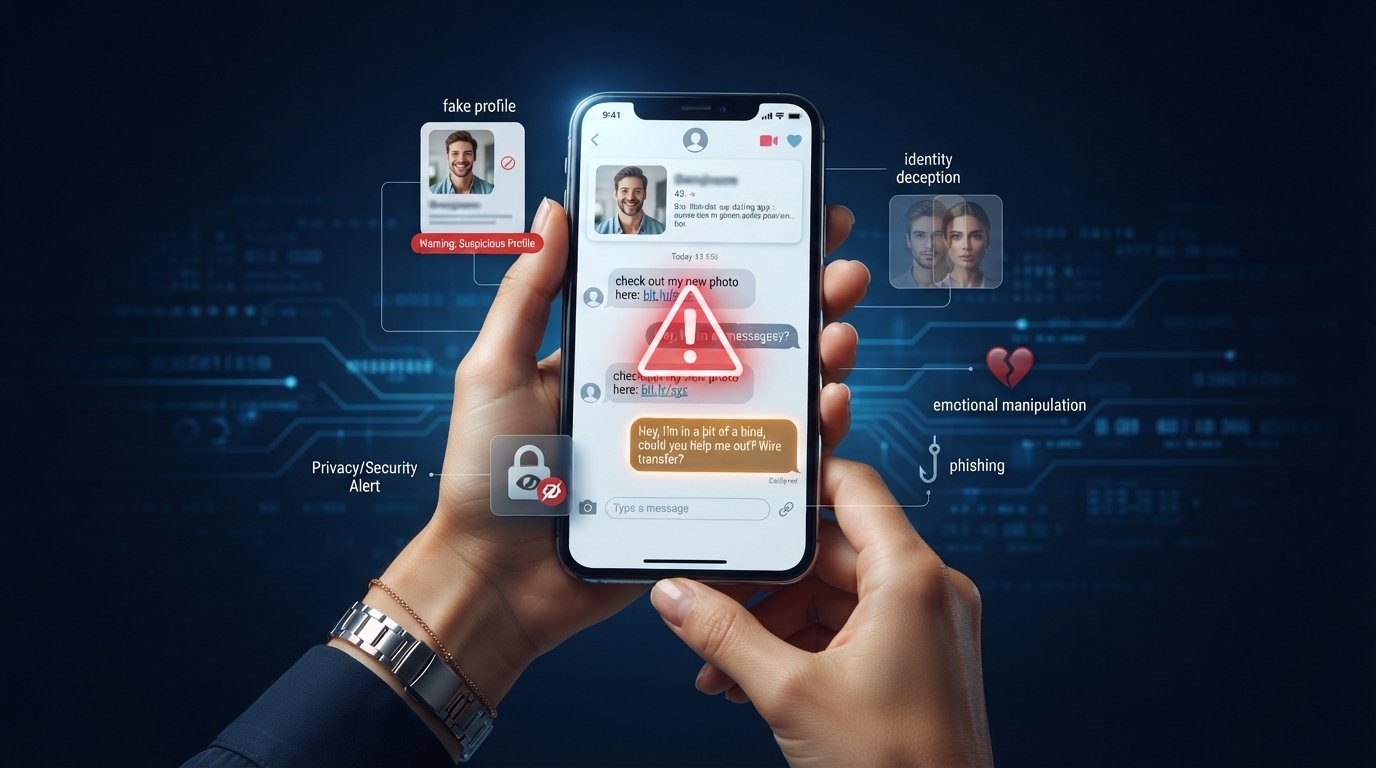
Dating apps can make it easier to meet new people, but like any online platform, they can also be used by people who have dishonest or harmful intentions. Dating app scams can range from fake profiles and misleading identities to financial fraud and attempts to steal personal information.
Scammers often try to build trust before asking for money, personal details, or other forms of assistance. Some may claim to be experiencing an emergency, while others may create elaborate stories about their job, travel, family, or financial situation.
Knowing the common warning signs can help you recognize suspicious behavior before you become involved. You do not need to assume that everyone you meet is dishonest, but you should pay attention when someone’s behavior does not make sense.
What Is a Dating App Scam?
A dating app scam happens when someone uses a dating platform to deceive another person for financial gain, personal information, access to accounts, or another harmful purpose.
The person may create a fake identity or misrepresent important information.
A scam can involve:
- Fake dating profiles
- Romance scams
- Requests for money
- Investment scams
- Fake emergencies
- Identity theft attempts
- Phishing links
- Fake verification requests
- Extortion or blackmail
- Fraudulent job or business opportunities
Scammers can target people of any age or background.
Why Do Scammers Use Dating Apps?
Dating apps provide an environment where people are actively looking for social or romantic connections.
A scammer may take advantage of this by building an emotional connection with someone before introducing a fraudulent request.
The process can sometimes look like a normal relationship at first.
Building Trust
A scammer may spend time communicating with a person and learning about their interests, daily life, family, or goals.
Creating an Emotional Connection
The person may use compliments, frequent messages, romantic language, or promises about the future to create a sense of closeness.
Making a Request
After trust has developed, the scammer may eventually ask for money, financial information, account access, or another form of assistance.
The request may appear urgent or emotionally difficult to refuse.
What Are the Most Common Dating App Scams?
Different scams use different techniques.
Romance Scams
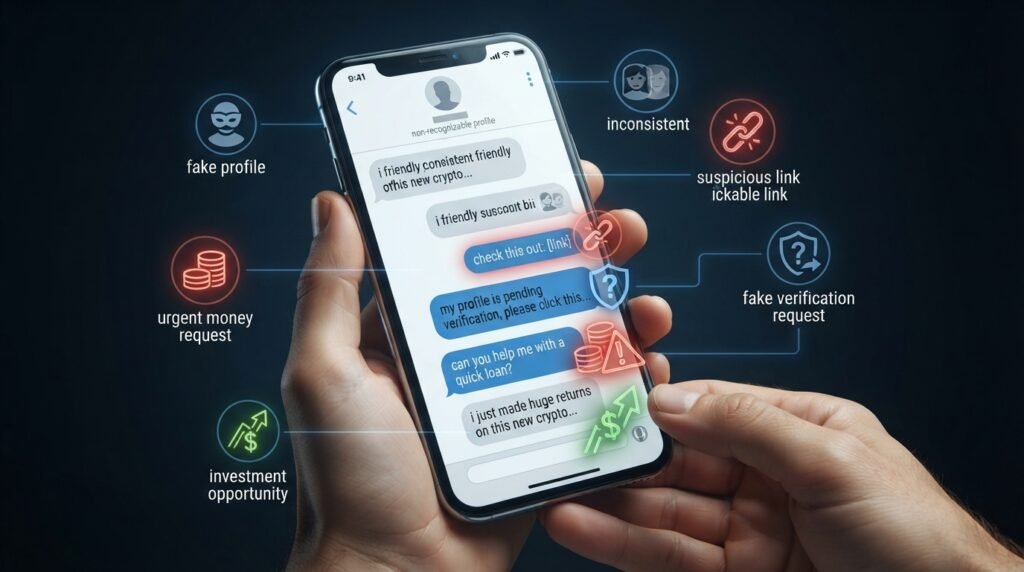
In a romance scam, someone creates a false romantic relationship with the goal of obtaining money or another benefit.
The scammer may claim to be deeply interested in you while avoiding a real-world meeting.
Eventually, they may ask for financial help.
Emergency Scams
A person may claim that they suddenly need money because of:
- A medical emergency
- A travel problem
- A lost wallet
- A family emergency
- A legal issue
- An unexpected bill
The story is designed to make you feel that immediate help is necessary.
Investment Scams
A scammer may introduce you to an investment opportunity after establishing a relationship.
They might claim to have special knowledge about:
- Cryptocurrency
- Trading
- Stocks
- Foreign exchange
- Online businesses
- Other investments
They may encourage you to send money or create an account through a platform they recommend.
A romantic relationship should never be treated as evidence that an investment opportunity is legitimate.
Phishing Scams
A scammer may send a link and encourage you to click it.
The link might lead to a fake website designed to collect:
- Passwords
- Login details
- Payment information
- Verification codes
- Other personal information
Unexpected links should be treated carefully.
Fake Verification Scams
Some scammers may claim that you need to complete a verification process before continuing the conversation.
They may send a link to a fake service that asks for personal or payment information.
Never assume a verification request is legitimate simply because someone sends it through a dating app.
Common Warning Signs of a Dating App Scam
One warning sign does not automatically prove that someone is a scammer.
However, several unusual behaviors occurring together should make you more cautious.
| Warning Sign | Why It Can Be Suspicious |
| Quickly becomes extremely romantic | May be an attempt to build trust unusually fast |
| Avoids meeting repeatedly | Could indicate that the identity is not genuine |
| Always has an excuse for video calls | May be avoiding verification |
| Requests money | A major warning sign |
| Talks about investment opportunities | Could be financial fraud |
| Sends suspicious links | May be phishing |
| Asks for verification codes | Could be an attempt to access an account |
| Stories frequently change | Inconsistent information can indicate deception |
| Wants to move off the app immediately | Can make reporting and moderation more difficult |
| Pressures you to keep the relationship secret | Can isolate you from people who might notice the scam |
Is It a Scam If Someone Refuses to Video Call?
Not necessarily.
Some legitimate people may be uncomfortable with video calls or have technical limitations.
However, repeated refusal combined with other suspicious behavior can be a warning sign.
For example, if someone claims to be interested in a serious relationship but continuously avoids reasonable ways of confirming their identity, you should be cautious.
Look at the overall pattern rather than relying on one behavior.
Why Do Scammers Avoid Meeting in Person?
A person using a fake identity may have difficulty meeting because their real identity does not match their profile.
They may repeatedly claim that they:
- Live far away
- Travel frequently
- Work in a restricted environment
- Have an emergency
- Cannot access a camera
- Are always too busy
Any individual explanation could be legitimate.
The concern comes when excuses continue indefinitely while the relationship becomes increasingly intense.
Should You Send Money to Someone You Met on a Dating App?
As a general safety rule, do not send money to someone you have only met online, especially when the relationship has not been independently verified.
This includes requests involving:
- Bank transfers
- Gift cards
- Cryptocurrency
- Loans
- Emergency expenses
- Travel costs
- Investment opportunities
- Fees or deposits
Romantic feelings should not be used as a reason to ignore financial warning signs.
What Personal Information Should You Protect?
Be careful about sharing information that could be used to access your accounts, locate you, or steal your identity.
Avoid sharing sensitive information such as:
- Passwords
- One-time verification codes
- Bank account information
- Credit card details
- Government identification numbers
- Private documents
- Home address
- Account recovery information
You should also be cautious about revealing detailed information about your daily routine.
Can Someone Steal Your Identity Through a Dating App?
Identity theft can occur if a person obtains enough personal information to impersonate you or access your accounts.
Dating conversations can sometimes reveal information that seems harmless individually but becomes more sensitive when combined.
For example, a person may gradually learn your:
- Full name
- Birthday
- Workplace
- Address
- Family information
- Email address
- Social media accounts
Avoid sharing unnecessary personal details with people you have only recently met online.
Be Careful With Links and Attachments
Do not automatically trust links sent by someone you meet through a dating app.
A suspicious link may lead to a fake login page, malicious website, or fraudulent service.
Before opening a link, consider:
- Do you recognize the website?
- Did you expect to receive the link?
- Is the sender pressuring you to click immediately?
- Does the website address look unusual?
- Is the person asking you to enter payment or login information?
If something feels suspicious, do not click it.
How to Protect Your Dating App Account
Account security is another important part of online dating safety.
Use a Strong, Unique Password
Avoid using the same password across multiple services.
If one account is compromised, reused passwords can put other accounts at risk.
Enable Two-Factor Authentication
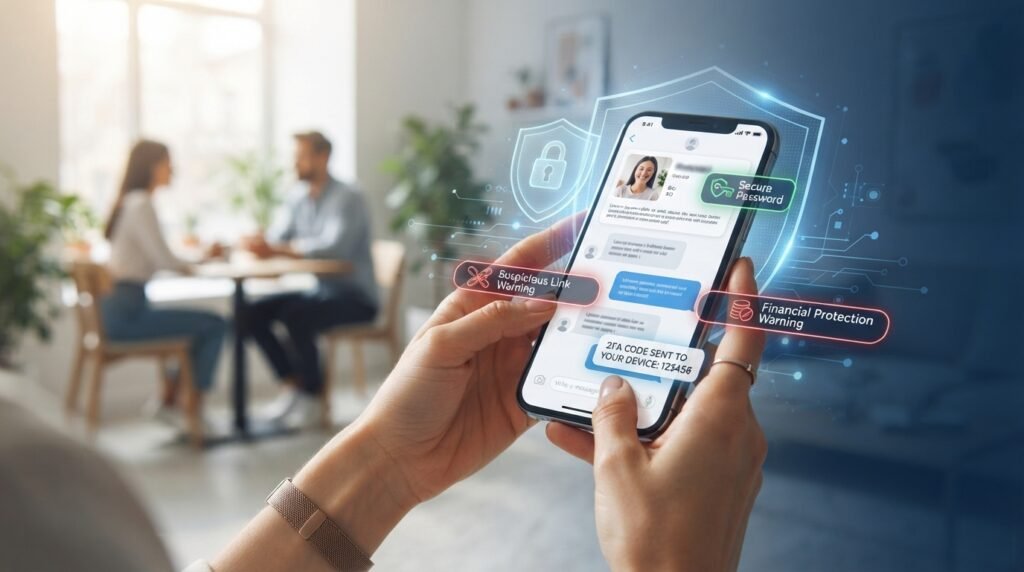
If the dating app or associated account offers two-factor authentication, consider enabling it.
This can provide an additional layer of protection beyond your password.
Never Share Verification Codes
A legitimate service should not require you to give your private login verification code to another person.
Treat one-time codes as private security information.
How to Verify Someone’s Identity Safely
You do not need to conduct an investigation into everyone you meet.
However, reasonable verification can help when something feels unusual.
Use In-App Features
If the dating platform provides identity or profile verification features, understand what they actually verify.
A verification badge does not necessarily prove everything about a person’s identity or intentions.
Have a Video Conversation
A video call can provide additional confidence that the person matches their photos.
It still does not guarantee that everything they have told you is true.
Look for Consistency
Pay attention to whether the person’s:
- Photos
- Stories
- Location
- Job information
- Timeline
- Other details
remain reasonably consistent over time.
What Should You Do If You Suspect a Scam?
If you believe someone may be attempting to scam you, stop and avoid making emotional or financial decisions.
Do Not Send Money
Do not send money simply because the person creates urgency or pressure.
Stop Sharing Information
Do not provide additional personal or financial details.
Save Evidence
If appropriate, keep relevant messages, profile information, transaction records, or screenshots.
This may help if you need to report the account.
Block the Person
Use the platform’s blocking tools when necessary.
Report the Account
Dating apps generally provide reporting options for suspicious or abusive behavior.
If money or identity theft is involved, consider reporting the incident to the appropriate financial institution or law-enforcement agency in your area.
What If You Already Sent Money?
Do not assume that it is too late to take action.
If you sent money to someone you suspect is a scammer:
- Stop sending additional money.
- Contact your bank or payment provider as soon as possible.
- Explain that you may have been affected by fraud.
- Change passwords that may have been exposed.
- Secure your email and other important accounts.
- Save relevant evidence.
- Report the scam through appropriate official channels.
The faster you act, the more options you may have for protecting your accounts or addressing a fraudulent transaction.
What If a Scammer Has Your Personal Information?
Take the situation seriously but avoid panicking.
The appropriate response depends on what information was shared.
If you shared a password, change it immediately.
If you shared information connected to a financial account, contact the relevant financial institution.
If you shared sensitive identity information, consider what account-security or identity-protection measures are appropriate in your country.
How Can You Stay Safe When Meeting Someone From a Dating App?
Online safety does not stop when you leave the app.
For a first meeting:
- Choose a public location.
- Tell someone you trust where you are going.
- Arrange your own transportation when possible.
- Keep your phone accessible.
- Avoid sharing your home address immediately.
- Stay aware of your surroundings.
- Leave if you feel uncomfortable or pressured.
You do not owe someone a second meeting simply because you agreed to the first one.
Dating App Safety Checklist
Before becoming seriously involved with someone you met online, consider the following:
- Is their information reasonably consistent?
- Have you communicated through more than one format?
- Have they repeatedly avoided reasonable identity checks?
- Have they asked you for money?
- Have they introduced an investment opportunity?
- Have they sent suspicious links?
- Have they pressured you to keep the relationship secret?
- Have they requested sensitive personal information?
- Do their actions match what they say?
If several answers raise concerns, take a step back.
Dating App Scams vs Normal Dating Behavior
Not every unusual behavior is automatically a scam.
| Behavior | Could Be Normal | Could Be Concerning When… |
| Slow replies | Someone may be busy | They disappear whenever important questions arise |
| Shyness about video calls | Some people dislike video calls | They continuously avoid any reasonable identity confirmation |
| Living far away | Long-distance dating exists | Distance is repeatedly used to avoid meeting while money is requested |
| Asking personal questions | Getting to know someone is normal | Questions focus on passwords, finances, or account access |
| Talking about work | Normal conversation | Their job is used to justify unusual financial requests |
| Moving to another app | Common for some users | They immediately pressure you to leave the dating platform |
The important factor is the overall pattern of behavior.
Frequently Asked Questions About Dating App Scams
What is the biggest warning sign of a dating app scam?
A request for money is one of the strongest warning signs, particularly when it is combined with an urgent story, romantic pressure, or a relationship that exists entirely online.
How do romance scammers gain trust?
They may communicate frequently, give compliments, create emotional closeness, and discuss a future relationship before eventually making a financial or personal request.
Should I send money to someone I met online?
It is safest not to send money to someone you have only met online, especially when you have not independently verified their identity and circumstances.
How can I tell if a dating profile is fake?
Look for inconsistent information, suspicious photos, unusual communication patterns, avoidance of reasonable identity verification, and requests for money or sensitive information. No single sign proves that a profile is fake.
What should I do if someone asks me for an investment?
Do not invest simply because you trust someone romantically. Stop and independently research the opportunity. If the person pressures you to send money or use a specific platform, treat that as a serious warning sign.
Is it safe to share my phone number on a dating app?
There is no universal rule, but you should only share contact information when you feel comfortable. Avoid sharing information that could expose your home address, workplace, accounts, or other sensitive details.
What should I do if I clicked a suspicious link?
If you entered login or financial information, take immediate steps to secure the affected account and contact the relevant service or financial institution. Change exposed passwords and monitor the account for unusual activity.
Can a dating app verification badge guarantee that someone is trustworthy?
No. Verification can provide information about a particular aspect of an account, but it does not guarantee that someone is honest, compatible, or safe.
What should I do if I think my match is a scammer?
Stop sharing information, avoid sending money, save relevant evidence, block the account, and report it through the dating platform. If financial fraud or identity theft is involved, contact the appropriate institution or authorities.
Can scammers fall in love with their victims?
The emotional behavior displayed by a scammer is often part of the deception. Whether the scammer has genuine feelings is not the important question. If someone is manipulating you for money or personal information, focus on protecting yourself rather than trying to determine their emotions.
Conclusion
Dating app scams often depend on trust, emotional pressure, and deception rather than obvious technical tricks. A scammer may spend considerable time building a relationship before asking for money, personal information, or access to an account.
You can reduce your risk by protecting sensitive information, treating financial requests with extreme caution, being careful with unexpected links, and paying attention to inconsistent stories or unusual behavior.
You do not need to become suspicious of every person you meet online. Instead, maintain reasonable boundaries and give trust time to develop. If someone pressures you for money, sensitive information, or immediate decisions, step back and evaluate the situation before taking action.
Your safety and financial security should always come before maintaining an online relationship.